


This post may use affiliate links from Amazon and other retailers which earn us a commission for any purchases made through them. This is done at no extra cost to you and we thank you for the support. Learn more.
If you’re either stepping into the world of concealed carry or contemplating a change in your current setup, exploring various carrying positions is key.
The ideal choice boils down to what suits your personal taste, body shape, wardrobe preferences, daily activities, and overall comfort and concealment needs but there aren’t any hard and fast rules when it comes to carrying positions as long as safety isn’t compromised.
Concealed carry methods are generally categorized into two main types: inside the waistband (IWB) and outside the waistband (OWB). To simplify understanding these positions, we often use clock-face terminology. Picture yourself standing at the center of a clock with 12 o’clock directly in front of you (your belly button area), 6 o’clock behind you, etc.
This guide aims to provide an extensive overview of different concealed carry locations using this intuitive system so let’s jump in.
He said to them, “But now if you have a purse, take it, and also a bag; and if you don’t have a sword, sell your cloak and buy one.” -Luke 22:36
Choosing the Right Concealed Carrying Positions for You
Choosing the best concealed carrying positions is vital for you to be safe, comfortable, and effective when things go south.
Ultimately, the essence of carrying concealed is to safeguard you and your loved ones. Carrying in the wrong position could potentially destroy that goal if it is done in an unsafe way.
Being a former law enforcement officer and currently a firearms instructor, I have tried nearly every concealed carry position imaginable within reason. I have listed all of the pros and cons of each of the most effective carrying positions and shared my experiences to put together this guide.

Factors to Consider
Carry positions around the waist, whether they are inside or outside the waistband, are usually referred to by the location on a clock face. For example, if you’re carrying on your hip, this would be referred to as the 3 o’clock position for the right-handed crowd and 9 o’clock for lefties.
Whichever method and holster type you choose, you should ask yourself the following:
- Can I draw quickly and safely, without being a danger to myself or someone around me?
- Can I defend my gun in a hand-to-hand scenario?
- Can I fully conceal my gun?
- Are my holster and belt good quality and protected from negligent discharges?
- Is a different carrying position better for me and my lifestyle?
- What handgun and what size handgun am I carrying?
These factors play a major role in your CCW journey. Having the best concealed carry handgun makes all the difference in my opinion and will dictate how you carry so start there and this guide can show you the best choices out there.
Once you’ve decided on your handgun, then you can start to think about your holster and carry position.
That said, let’s look into the most popular carrying positions utilized by everyday carriers today.

The Most Popular Concealed Carry Positions Explained
You’ve got options when it comes to concealed carrying positions. But which one’s right for you?
Let’s break down the most popular concealed carry positions, so you can choose the best fit for your lifestyle and body type.
Appendix Inside the Waistband (AIWB)

This appendix position is a favorite for many concealed carriers, including myself. This position allows for a swift draw and discreet hiding, particularly when donning a shirt that isn’t tucked in.
This carrying position doesn’t work very well if you have a gut however and is usually intimidating to a novice shooter.
Related: Best Appendix Holster: Ultimate Guide to Top Carry Choices
Inside the Waistband (IWB) – 3 and 5 O’clock Positions

IWB holsters at the 3 or 5 o’clock position are classic choices. They work well for most body types and provide a good balance of comfort and concealment.
Related: Finding the Best IWB Holster for Reliable Concealed Carry
Outside the Waistband (OWB) – 3 and 5-6 O’clock Positions
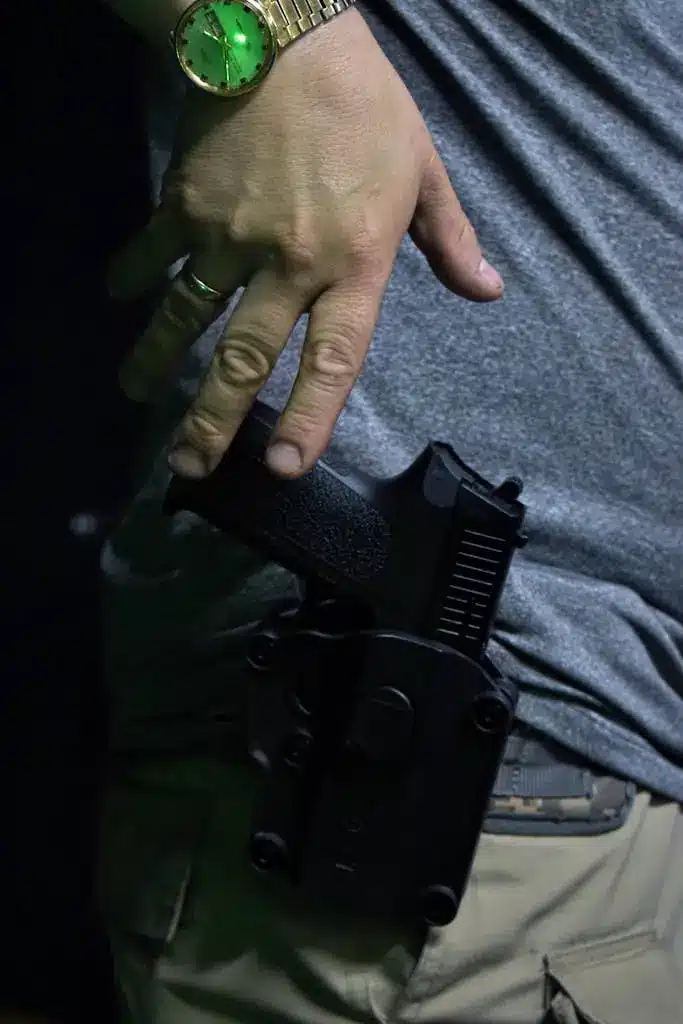
OWB holsters are another solid option, especially at the 3 o’clock position. They’re easy to draw from and work well with a cover garment like a jacket or untucked shirt.
This is probably the most comfortable so long as you can keep your firearm concealed. Otherwise, you are just open-carrying.
Related: Hidden Hybrid Holsters Review: The Best Concealed Comfort
Shoulder Carry Position
For a deep concealment option, you could consider a shoulder holster. This carry position works especially well if you spend a lot of time sitting, like driving or at a desk job, and wear a jacket or a suit.
There is a reason that this is the stereotypical FBI agent or undercover agent carry position.
Alternative Concealed Carry Options for Everyday Use
When it comes to concealed carry, you’ve got options beyond the waistband. Let’s talk about some alternative methods that could work for your lifestyle. Though I generally don’t prefer these carrying positions, they can be useful in some scenarios.
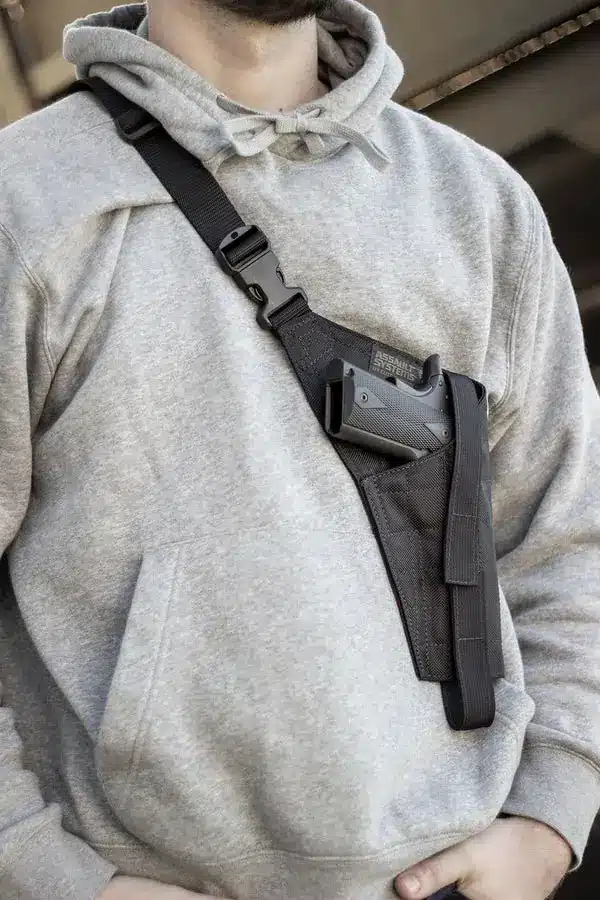
Belly Band Holsters
Belly bands are a popular carry option, particularly among women. They wrap around your midsection, allowing you to position your firearm wherever feels most comfortable. Elastic material keeps everything snug and secure against your body.
Ankle Carry
Ankle carry is popular with some law enforcement officers as a backup firearm. It keeps your gun concealed and accessible while seated. But, drawing from this position takes practice to master and most modern LEO’s don’t practice this carry method very often in my experience.
Pocket Carry
With the right holster, pocket carry is a viable option for smaller firearms. Look for a holster that covers the trigger guard and keeps your gun in a consistent position for easy drawing. Just be mindful of printing through lighter pants fabrics.
Cross Draw
This is another option that is beneficial for certain individuals and can be a helpful method of conceal carry or open OWB carry for that matter. It requires you to draw your handgun from across your body from the opposite of your dominant side.
How to Practice Safe and Effective Concealment Techniques
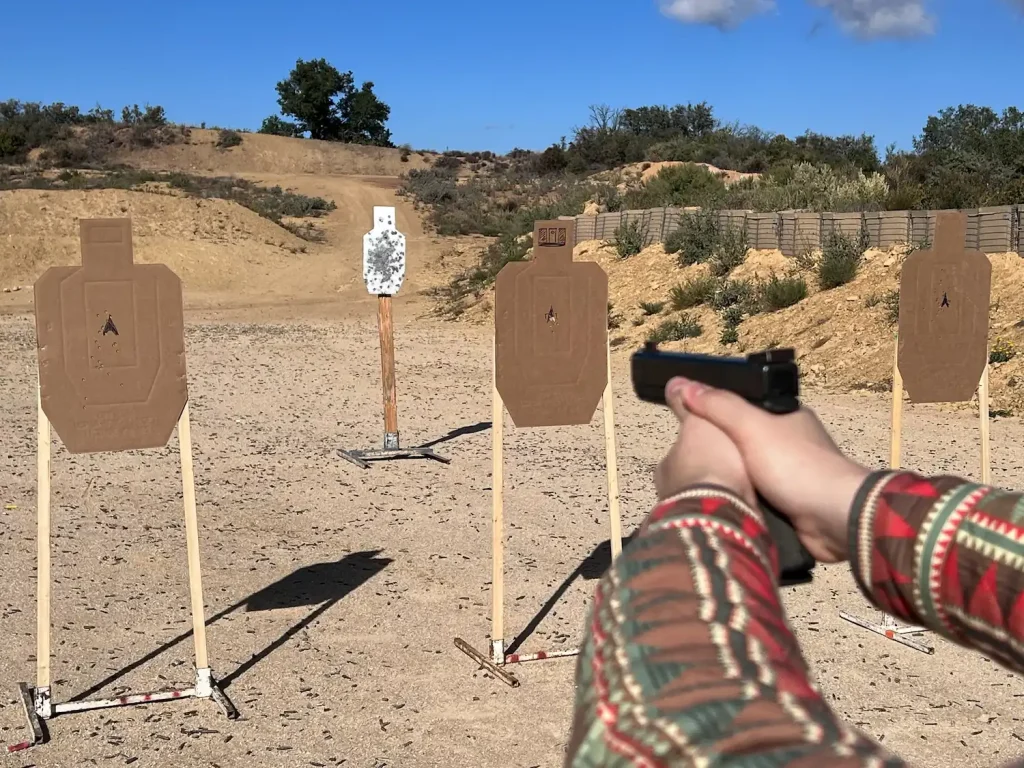
Choosing the right concealed carry position is just the beginning. To be truly prepared, you need to practice regularly with your firearm, your chosen holster, and the clothing you wear regularly.
This isn’t just about being a good shot. It’s also about gun handling and how to grip a pistol properly. In this case, it’s all about cultivating that instinctual reflex, allowing you to react quickly and effectively when the pressure is on.
Related: Proper Handgun Grip: How to Hold a Pistol for Accuracy
Importance of Regular Practice
Consistent practice is key particularly in clearing your garment and drawing your handgun from the carrying positions you will utilize. Set aside time each week to work on your draw, aim, and trigger control. The more you practice, the more natural it will become.
This is called dryfire practice and is essentially just practicing using your handgun without live ammunition present or near the gun.
Focus on smooth, efficient movements that are repeatable. Aim to seamlessly reach for your firearm, clear your garment, and draw to present your handgun in a repeatable fashion to build muscle memory. You can then begin to start drawing from everyday random starting positions that you might find yourself in once you become more proficient.
Related: Dry Firing Techniques To Unlock Your Shooting Potential
Quick Draw Techniques for Self-Defense
When it comes to self-defense, every second counts. That’s why mastering a quick draw is essential.
Start slow, focusing on each step of the process. As you build confidence, gradually increase your speed. Remember, smooth and efficient is fast.
Also, keep in mind that perfect practice makes perfect. Just going through the motions can build unfavorable habits if you aren’t training with intention.
Practice drawing from various positions once you become more comfortable- standing, sitting, or even lying down. In a real-world scenario, you never know what position you’ll be in when you need your gun.
That being said you might find yourself in a scenario where your handgun isn’t even on you.
Understanding Off-Body Carry Methods
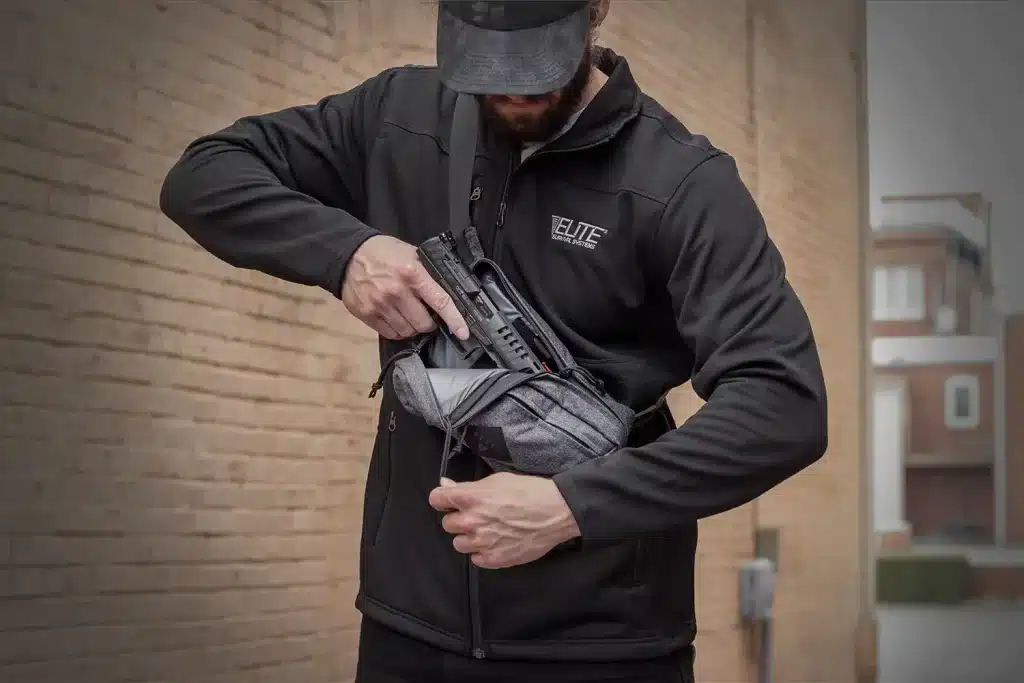
If your body shape, current scenario, or lifestyle just doesn’t allow you to wear a holster, off-body carry can be an alternative. Options like tactical fanny packs (yes they are coming back), purses, rucksacks, and other handbags fall under this category.
I actually carry off-body every single day during the regular work week. Being on a construction site doesn’t call for carrying AIWB 😅. So I utilize this method until I am out and about in society.
Off-body carry involves using a specialized bag to carry your gun or just any old bag with your handgun in a safe and secure holster. Here are some of the best IWB holsters and best AIWB holsters on the market that are worth looking into.
Most dedicated off-body carry options are designed with an integral holster like those from Elite Survival Systems. I have teamed up with them to get you 15% off if you decide to buy any tactical bag or gear using code “menofstrength15”.

Advantages and Disadvantages of Off-Body Carrying
Off-body carry options are plentiful and have their own set of considerations and training needed to use them successfully.
When you have a weapon in something like a backpack, you need to keep that backpack on or near you at all times or at least secure and safe if unattended.
I do not recommend these as the primary way to carry unless there is no other alternative or your specific scenario calls for it like how I shared.
The draw process can be tricky with off-body carry. It’s not as quick and easy as drawing from a holster on your body.
But if it’s your only option, it’s still better than not carrying at all.
Carrying Positions FAQs
What is the best carrying position?
The best carry position depends on your lifestyle, comfort, and ease of access. Many people prefer the appendix inside the waistband (AIWB) because it is generally the most secure and effective.
What is the most comfortable carry position?
Comfort varies from person to person, but the inside the waistband (IWB) at 5 o’clock position is often favored due to its balance between accessibility and concealment. Again this is dependent on the individual. The AIWB position is favored by many as well.
What is a carry position?
A carry position refers to the location where you place your firearm on or near your body while concealing it from view.
What is the FBI carry position?
The FBI stance favors a strong-side hip holster, typically positioned around 4-5 o’clock. This position blends easy reach with effective concealment.
Concealed Carrying Positions Final Thoughts
So, there you have it. The dance of concealment isn’t just a step; it’s an art form that every prepared man needs to know. We’ve journeyed through the shadows and lights of carrying positions, uncovering not just the how but the why behind each choice.
The truth is, whether it’s appendix carry for quick access or shoulder holsters, there’s no one-size-fits-all answer. It all boils down to what fits you best- your body type, lifestyle, and personal preference.
This knowledge isn’t just power; it’s peace of mind in knowing that safety doesn’t have to compromise style or comfort. With newfound understanding, you’re ready to select the concealed carry position that aligns perfectly with your needs.
And remember, practice makes perfect – or in our case, perfect practice makes for efficient drawing and peacekeeping capabilities.
Ready for the next thing? Read these guides to help you get your hands on the best gear for concealed carrying that’s available today. You’ll also get access to some awesome discounts because who doesn’t love saving some cash.
- Finding the Best IWB Holster for Reliable Concealed Carry
- Best Appendix Holster: Ultimate Guide to Top Carry Choices
- Find the Best Concealed Carry Gun for Reliable Defense


